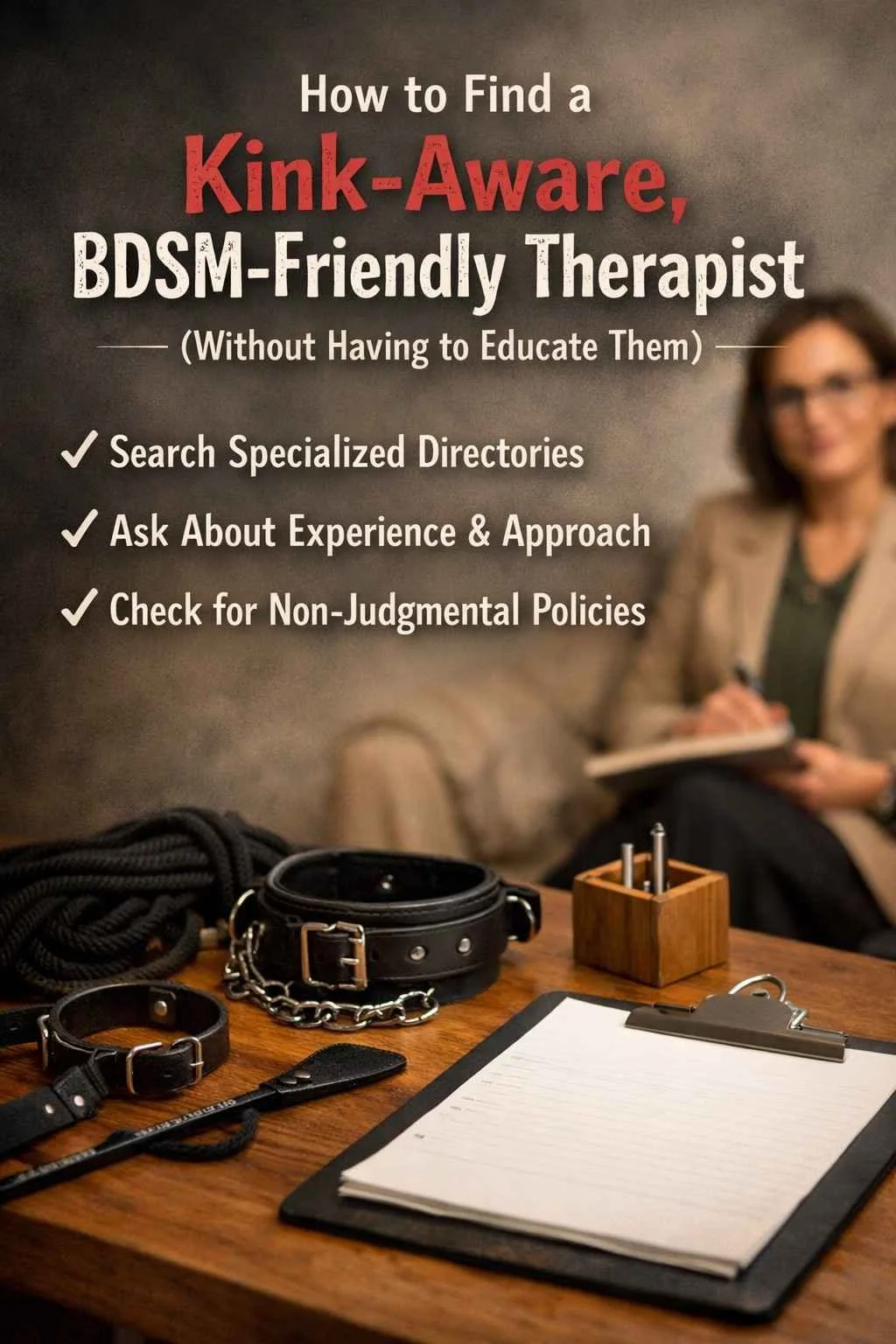
How to Find a Kink-Aware, BDSM-Friendly Therapist (Without Having to Educate Them)
The fastest way to avoid “therapist education labor” is to stop searching for labels (“kink-friendly”) and start verifying competence. Use a 3-layer filter—License & scope → Kink competence → Fit & process—then run a 15-minute consult scorecard that checks for non-pathologizing language, consent-centered framing, and a clear therapy process. Published kink clinical practice guidelines exist, and they emphasize culturally competent, non-stigmatizing care—not moral judgment.
This post stays non-graphic by design. You can screen a therapist without sharing explicit details.
Read more: Affirmative Therapy in Irvine: A Guide to Healing
Why “BDSM-friendly” is not the same as “kink-aware”
Many therapists will say they’re “sex-positive” or “kink-allied,” but that label isn’t a regulated credential. Even large directories acknowledge that specialized training for “kink-allied” treatment is generally not standardized, and competence varies—so you still need a verification process.
A kink-aware therapist can:
use neutral, non-pathologizing language
work skillfully with consent, boundaries, shame, anxiety, trauma, and relationship dynamics
understand stigma/minority stress without making your identity or interests the “problem”
collaborate and repair misunderstandings
That “repair” piece matters: if you ever feel judged or misunderstood, you need a clinician who can correct course quickly instead of doubling down.
Read more: Boost Confidence Affirmative Therapy
The 3-Layer Filter (use this before you book anyone)
Layer 1: License + scope (baseline safety)
You’re looking for a licensed mental health professional (e.g., psychologist, LMFT, LCSW, LPC—varies by region). This isn’t about status; it’s about accountability, ethics, and scope of practice.
Quick checks:
licensed in your state/country (especially for telehealth)
clear scope (therapy vs coaching)
transparent fees and policies
Layer 2: Kink competence (the “don’t make me educate you” layer)
Here’s the key: competence is observable. You’re screening for a therapist who can work with kink-involved clients without default stigma. That approach aligns with published clinical guidelines developed by experienced clinicians and researchers.
You’re looking for:
language that centers impact, agency, and consent (not “why are you like this?”)
comfort discussing relationship structures and sexuality without steering you toward “normal”
clear boundaries: they won’t ask for explicit details to “prove” they understand
Layer 3: Fit + process (what makes therapy actually work)
Even a kink-competent therapist can be the wrong fit. You want:
a clear treatment plan (what you’ll do in the first month)
collaborative style (you set pace and goals)
ability to handle rupture/repair if something lands wrong
Read more: Understanding Affirmative Therapy and Its Impact on Wellness
Where to search first (lowest “education burden” sources)
1) Start with a specialized directory
Kink Aware Professionals (KAP) is a directory service that lists professionals who state they are knowledgeable and sensitive to diverse sexuality and relationship structures, offered by National Coalition for Sexual Freedom (NCSF). It’s designed specifically to reduce the “explain everything from scratch” problem.
How to use it well:
Don’t assume every listing equals deep competence.
Use it as your first-pass shortlist, then apply the scorecard below.
2) Use a credential signal when sex therapy is central
AASECT maintains a referral directory of certified sexuality professionals (educators, counselors, therapists). That credential can be a helpful signal when your goals involve sexual functioning, desire, intimacy, or relationship dynamics.
How to use it well:
Look for strong overlap: trauma-informed + sexuality competence + non-judgmental stance.
3) Use big directories, but treat labels as marketing
Psychology Today has a “sex-positive, kink-allied” category that helps you find names fast. But it also explicitly notes that specialized training is generally not standardized—expertise varies and often depends on experience and engagement with sex-positive communities.
How to use it well:
Use the filter to create a list.
Then verify competence with a structured consult.
4) Know that clinical guidelines exist (use that to set your standard)
TASHRA hosts resources about kink clinical practice guidelines and professional competencies, reinforcing a key point: kink-competent care is a real clinical competency topic, not a fringe preference.
Read more: Affirmative Therapy in Irvine: Embrace Your Authenticity
The 15-minute consult scorecard (this is your unfair advantage)
Your goal is simple: confirm competence without oversharing.
Step 1: Open with a boundary (copy/paste)
“I’m looking for a therapist who’s kink-aware and non-pathologizing. I don’t want to share explicit details in a consult—just to understand your approach and whether we’re a fit.”
A competent therapist will respect that immediately.
Step 2: Ask these 6 questions (and score them)
Score each 0–2:
0 = red flag
1 = vague / unclear
2 = strong
Experience & comfort
“Have you worked with clients who are kink-involved or BDSM-identified? What does that look like in your practice?”
A strong answer sounds like: calm, neutral, normalizing; avoids sensationalism.Non-pathologizing stance
“How do you distinguish distress from stigma/shame versus distress caused by a behavior pattern itself?”
Strong answer: focuses on impact and agency; doesn’t label kink as inherently harmful. (This aligns with published kink clinical guidelines emphasizing culturally competent, non-stigmatizing care.)Consent and boundaries (clinical framing)
“How do you work with consent, boundaries, and communication without making assumptions about what I do?”
Strong answer: process-based; no push for explicit content.Therapy process: what the first month looks like
“If we work together, what do you typically do in the first 4 sessions?”
Strong answer: assessment → goals → plan → skills; clear pacing.Rupture and repair
“If I feel misunderstood or judged, how do you want me to bring that up—and how do you handle repair?”
Strong answer: invites feedback; names repair as normal.Privacy and documentation
“What do you document in records? Can we keep notes focused on goals and symptoms rather than unnecessary detail?”
Why this matters: psychotherapy notes receive special protections under HIPAA, and it’s reasonable to ask what goes into the medical record versus separate process notes.
Step 3: Interpret the score
10–12: strong candidate—book the first session
7–9: proceed only if the vibe is good and they can clarify gaps
0–6: don’t rationalize it—keep searching
Read more: Best Practices of Affirmative Therapy
Green flags and red flags (fast pattern recognition)
Green flags
Neutral language; treats kink as a context, not a diagnosis
Focus on consent, boundaries, safety, and personal agency
Can discuss shame, anxiety, relationship conflict without moralizing
Clear structure: assessment → goals → skills → review
Welcomes feedback and repair
Respects “no explicit details” boundaries in the consult
Red flags
“I’m open-minded, BUT…” followed by moral framing
Treats BDSM/kink as inherently traumatic, addictive, or disordered by default
Pressures you to disclose explicit detail early to “confirm” they can handle it
“Let’s not use labels” used to dismiss your reality rather than reduce shame
Pushes you toward a narrow idea of normal sexuality or relationships
If you see two or more red flags in the consult, don’t negotiate with your nervous system. Move on.
Read more: Safe Spaces Online: LGBTQIA+ Affirming Therapy Resources
What to do if you don’t have good options locally
Choose competence over commute (telehealth)
If you’re worried you’ll only find “tolerant but clueless” locally, telehealth can expand your pool dramatically—especially for niche competence.
Use a “specialist + generalist” approach
Sometimes the best outcome is:
a general therapist for weekly work (anxiety, depression, trauma, relationships), plus
a sexuality-informed specialist for periodic consultation
This reduces your burden while keeping therapy consistent.
Read more: Affirmative Therapy: A New Approach to Mental Wellness
How to protect your privacy without sounding paranoid
It’s normal to want clarity. The U.S. Department of Health & Human Services (HHS) explains that psychotherapy notes receive special protections under HIPAA.
Use this language:
“I’m comfortable working on goals like shame, anxiety, relationship communication, and boundaries. I’d like documentation to stay focused on symptoms and treatment goals rather than unnecessary specifics.”
A competent clinician won’t argue. They’ll explain their documentation norms and options.
Read more: Culturally Aware Affirmative Therapy
A therapist email template that gets better replies
Subject: Kink-aware therapy consult (non-graphic screening)
Body:
Hi [Name],
I’m looking for a kink-aware therapist who works in a non-pathologizing, consent-centered way. I’m not looking to share explicit details up front.
Are you comfortable supporting clients where kink/BDSM is part of their identity or relationship context? If so, could you share how you approach: (1) consent/boundaries, (2) shame/anxiety, and (3) what the first month of therapy typically looks like?
Thanks,
[Your name]
This gives them a fair shot to demonstrate competence without you doing free teaching.
FAQs
-
It means the therapist can work with kink-involved clients using neutral language and a non-pathologizing stance, focusing on consent, impact, boundaries, and well-being—consistent with published clinical guidelines.
-
Usually no. Some directories explicitly state that specialized training for “kink-allied” treatment is generally not standardized, so experience and demonstrated competence matter more than labels.
-
No. You can screen based on their approach, language, and clinical process (goals, pacing, boundaries, documentation) without sharing explicit content.
-
Start with specialty sources like KAP and credential-based directories like AASECT, then verify fit using a consult scorecard.
-
If they treat kink as inherently pathological or push for explicit disclosure before trust is built, it’s a strong sign to move on.
-
Yes. HHS notes psychotherapy notes have special protections under HIPAA, and it’s reasonable to ask what gets documented and request minimal necessary detail.
-
Look for a therapist who can treat shame as a learned threat response and work skills-first (self-compassion, cognitive tools, values) without moralizing or pathologizing your sexuality.
-
Use telehealth, widen your radius, or pair a general therapist with periodic specialist consultation.
If you want a therapist where you don’t have to “teach the basics,” Grey Insight positions its work as affirmative and culturally competent for sexuality and relationship diversity. Invite readers to use your free consultation as the exact 15-minute scorecard conversation: approach, fit, and a clear first-month plan.